
Buckthorn
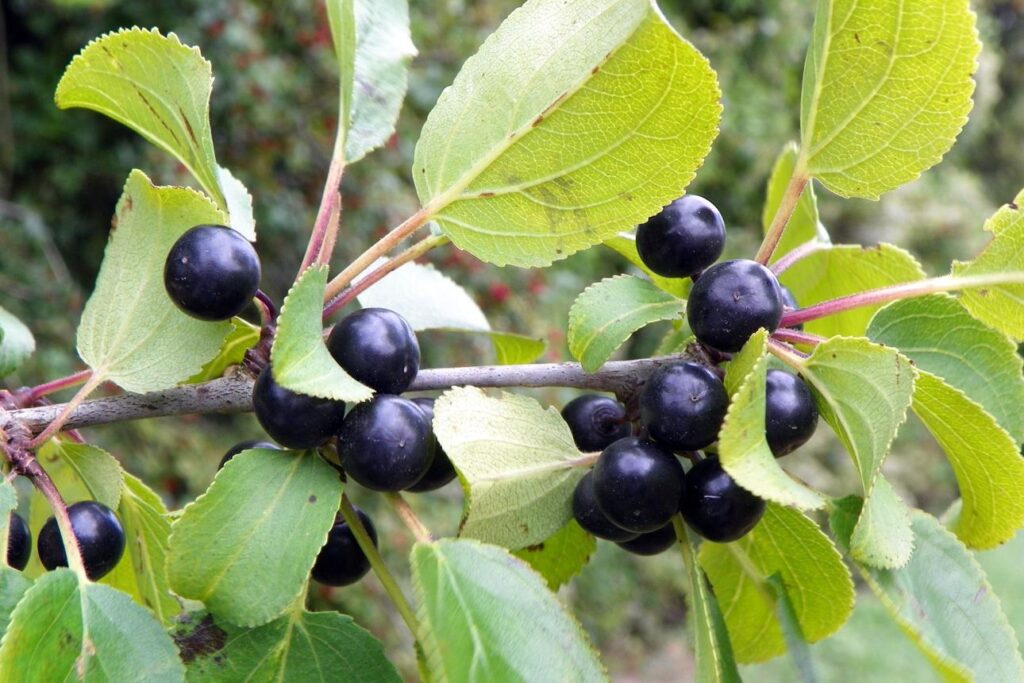
Common buckthorn (Rhamnus cathartica)
Identify it: A shrub or small tree with oval, finely toothed leaves, dark berries in fall, and often a sharp thorn at the end of its twigs.
Why it’s harmful: Forms dense growth that shades out native wildflowers and young trees.
Remove it: Pull small seedlings when the soil is moist, removing the roots. Larger shrubs generally require cutting and prompt stump treatment to prevent resprouting.
Multiflora Rosa
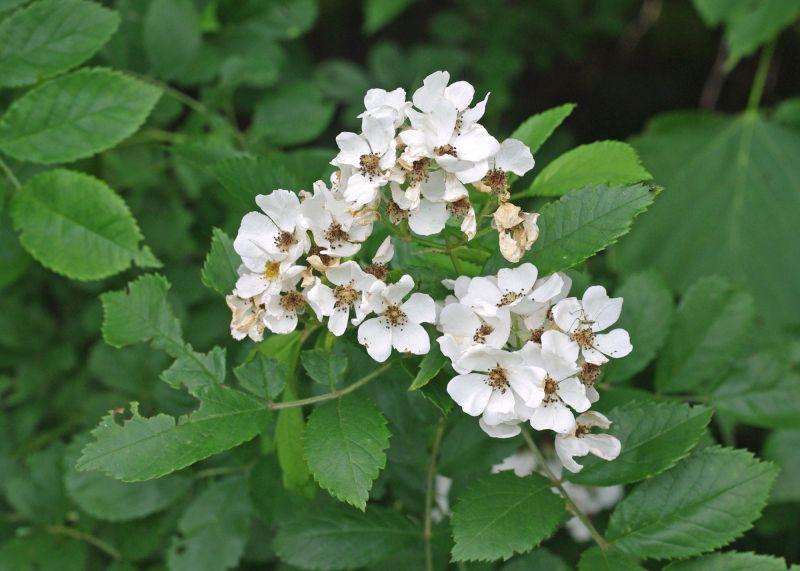
Rosa multiflora
Identify it: A sprawling, thorny shrub with arching branches, clusters of small white flowers in late spring, and red rose hips in fall.
Why it’s harmful: Creates thick, tangled thickets that crowd out native plants and limit wildlife movement.
Remove it: Dig out small plants, including the root crown. Larger plants may require repeated cutting or targeted treatment. Wear heavy gloves!
Asian Bittersweet
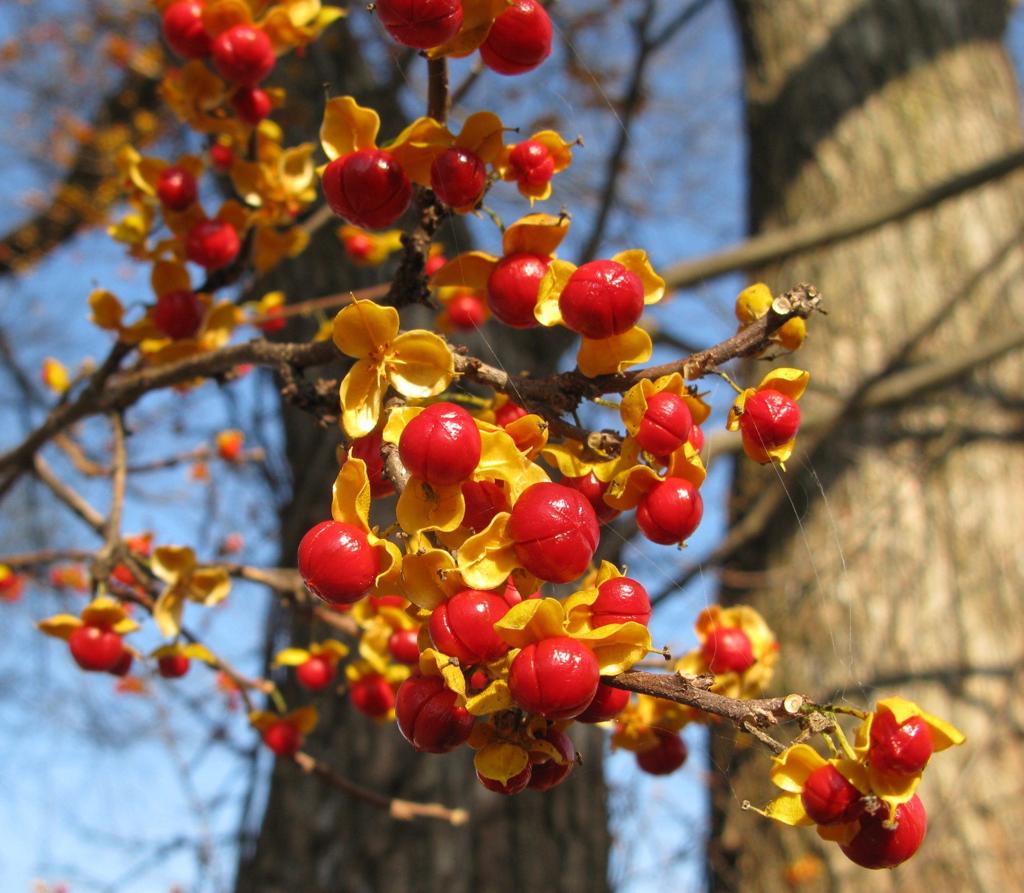
Celastrus orbiculatus, also called round-leaf or Oriental bittersweet
Identify it: A woody climbing vine with roundish leaves and yellow fruit capsules that split open to reveal bright orange-red berries.
Why it’s harmful: Twists around trees, damages trunks and branches, and can eventually overwhelm even mature trees.
Remove it: Pull small rooted vines. For large vines, cut near ground level and arrange appropriate treatment of the rooted portion. Leave vines hanging in trees rather than pulling them down, which can damage branches.
Japanese Barberry
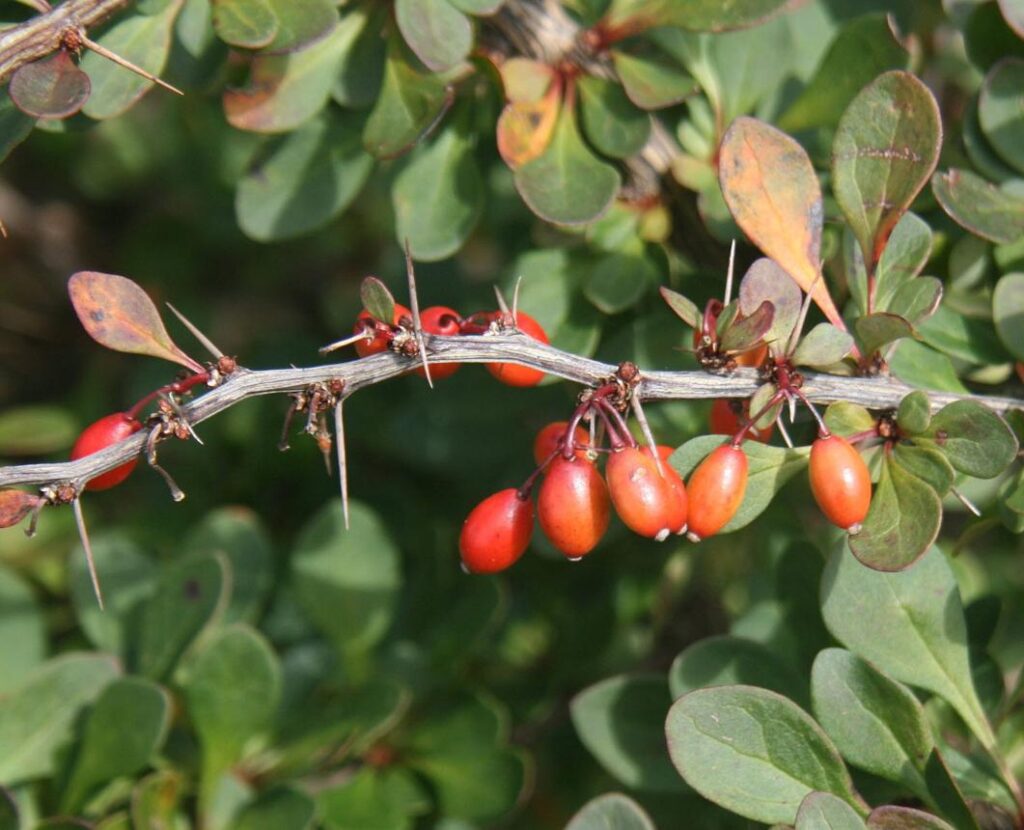
Berberis thunbergii
Identify it: A compact, thorny shrub with small oval leaves,
often green or reddish-purple, and bright red berries that may remain through winter.
Why it’s harmful: Crowds out native understory plants.
Dense barberry stands can also create favorable conditions
for blacklegged ticks.
Remove it: Pull or dig small shrubs, including roots. Larger
plants may need cutting and follow-up treatment. Wear protective gloves.
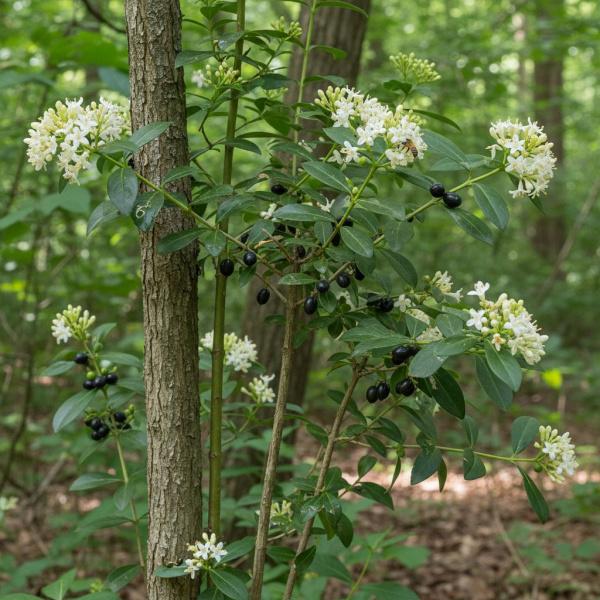
Privet
Ligustrum species
Identify it: A dense shrub with opposite, oval leaves, clusters of small white flowers, and dark purple-black berries.
Why it’s harmful: Spreads into natural areas, forming thickets that displace native shrubs and woodland plants.
Remove it: Pull or dig seedlings and small shrubs. Larger plants often resprout after cutting and need follow-up control.
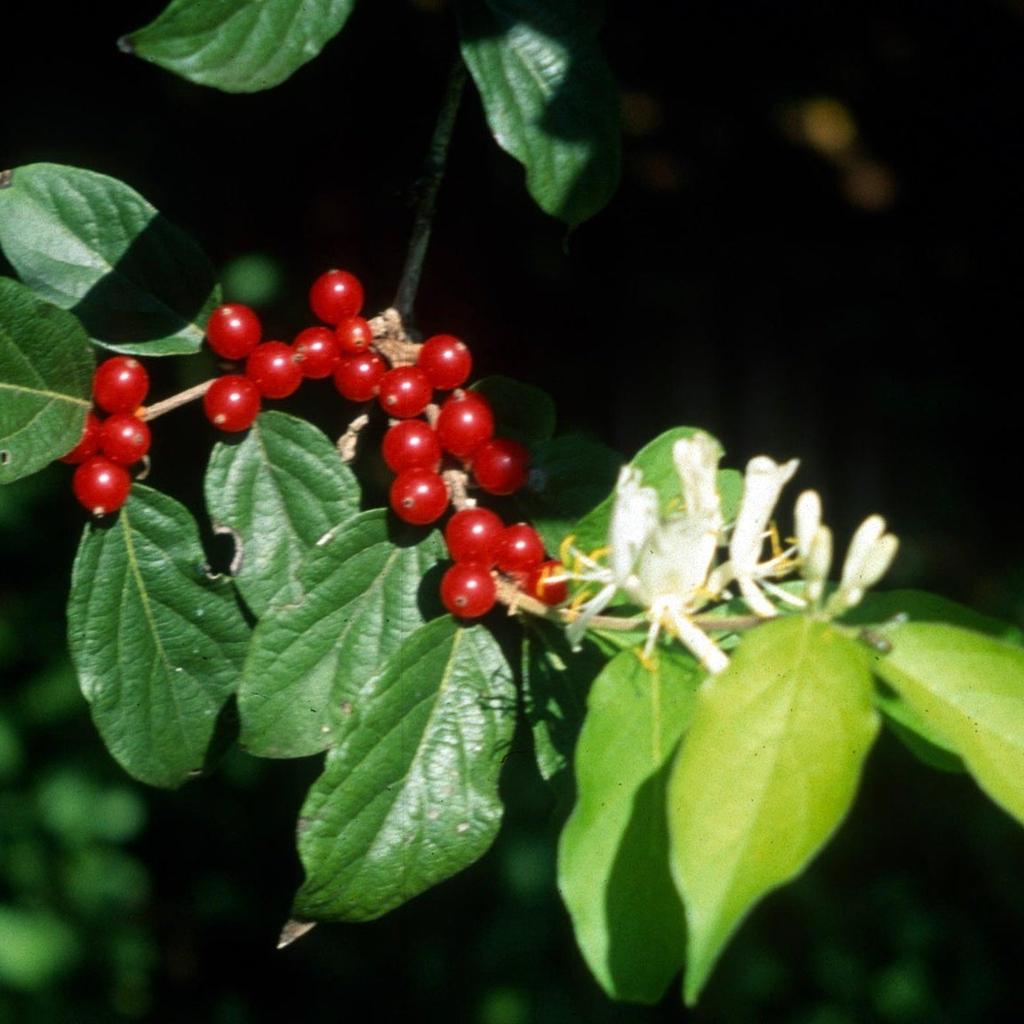
Asian Bush Honeysuckle
Lonicera species
Identify it: A large shrub with opposite leaves, fragrant white to yellowish flowers, and red or orange berries. Often stays green later into fall than native shrubs.
Why it’s harmful: Grows rapidly, creating dense shade that prevents native seedlings and wildflowers from growing.
Remove it: Pull young plants with roots intact. Larger shrubs typically require cutting and stump treatment or repeated follow-up removal.